Company news
28
2024
-
05
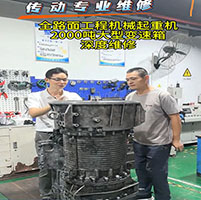
ZF road construction machinery clutch disc replacement
Author:Founder
1. Precise proportion of composite friction materials: 8-15% copper powder, 8-12% flake graphite and ceramic fiber are scientifically compounded in the copper-based base material. Friction-increasing agents (such as silicon carbide) are used to enhance the strength of the friction interface. At the same time, friction-reducing agents are used to form a lubricating film to reduce hard contact wear and avoid the rapid wear of conventional copper-based materials caused by a single component.
2. High-pressure sintering densification process: Using sintering pressure and precise temperature control curve higher than industry standards, the internal porosity of the friction layer is reduced to less than 15%, and the structure is denser and more uniform. This process reduces material peeling during the friction process, reducing the wear rate by more than 30% compared to ordinary sintered products, while improving heat conduction efficiency to suppress high-temperature wear.
3. Surface microstructure optimization: Through precision grinding and special texture treatment, the friction surface forms micron-level uniform grooves. This structure can not only store gearbox oil for dynamic lubrication, but also quickly discharge friction debris to avoid "grinding wear" caused by accumulation of abrasive particles at the interface. It also increases the heat diffusion rate to reduce wear caused by thermal ablation [__LINK_ICON].
4. Strong bonding design between the base material and the friction layer: Gradient composite technology is used to achieve a metallurgical-grade bonding between the base material and the friction layer. The bonding strength is increased by more than 50% compared with traditional bonding processes. This design eliminates the shedding or delamination of the friction layer, avoids uneven wear caused by local structural failure, and extends the overall service life.
5. Collaborative development of adaptive friction pairs: Customize friction plate hardness parameters (HV 180-220) for different gearbox models, and form a matching system with ZF special steel plate pairs. By controlling the hardness difference of the friction pair, excessive wear of a single component is avoided, while bite impact is reduced, achieving synchronized long-term wear of the two and reducing overall operation and maintenance costs.
Related news